Leverage and liquidation: how far price can move before you are out
Leverage does not change your risk if the stop sets your size. It changes your margin and your liquidation price.
On this page
Leverage is often described as a risk dial. If you size from your stop, it is not. Leverage decides how much margin you post and where the exchange closes you out, and that is where the danger sits.
What leverage actually changes
On a futures exchange, you post margin and control a larger position. At 10× leverage, 500 USDT of margin controls a 5,000 USDT position.
Your profit or loss depends on the position size and the price move, not on the leverage setting. A 5,000 USDT position that moves 2% against you loses 100 USDT at 2× or at 20×.
Where liquidation happens
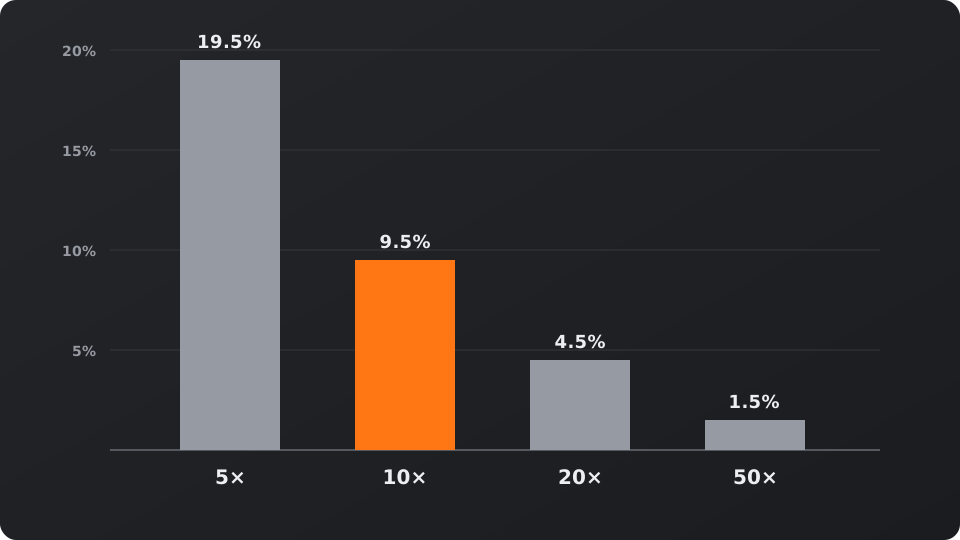
If losses eat through your margin, the exchange closes the position. For an isolated long, a rough estimate of the distance to liquidation is 1 ÷ leverage − maintenance margin rate.
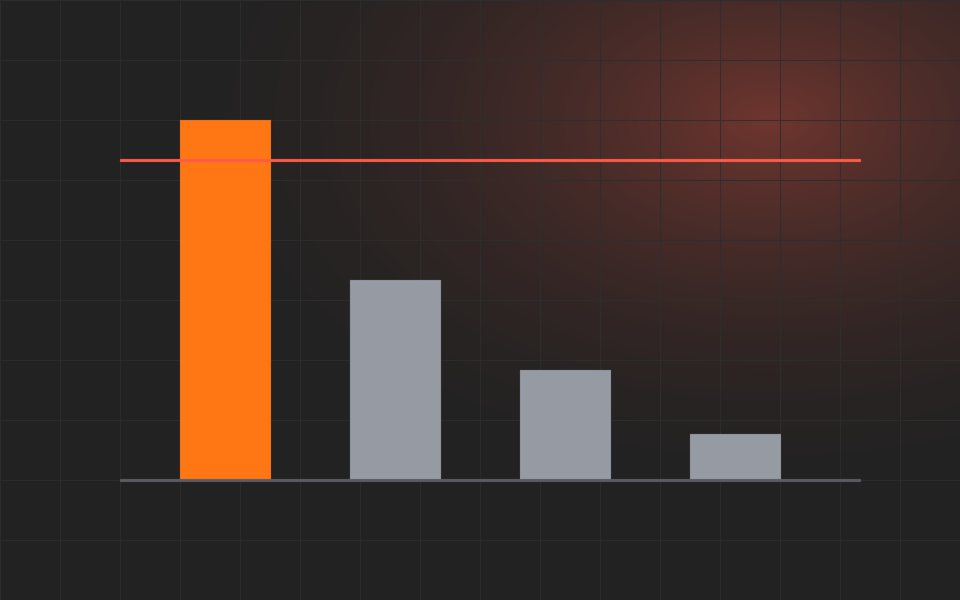
Assuming a 0.5% maintenance rate: about 19.5% away at 5×, 9.5% at 10×, 4.5% at 20× and only 1.5% at 50×. Real formulas differ by exchange and include fees and funding, so always read the liquidation price the exchange shows.
Same stop, very different outcomes
Assume a 10,000 USDT account and a setup with a stop 2% below entry.
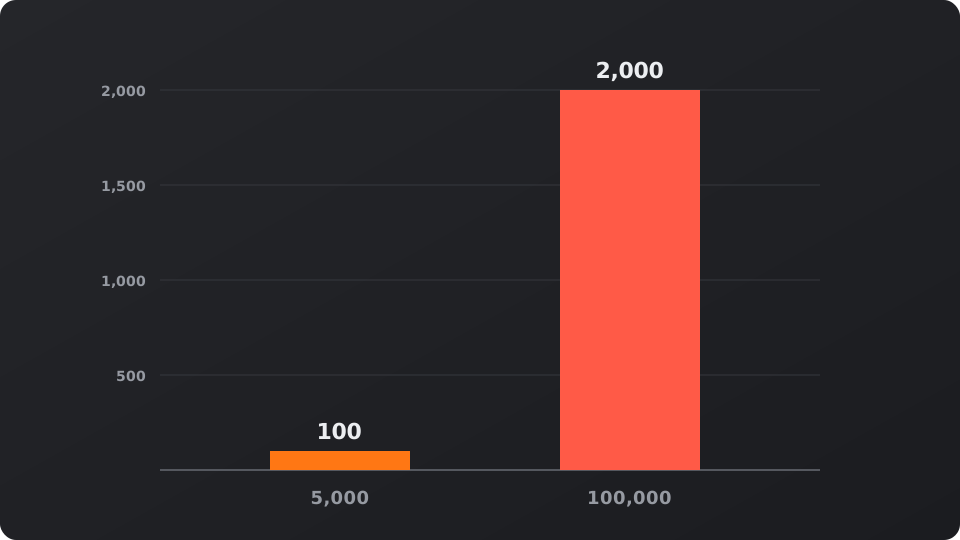
- Sized from the stop: a 5,000 USDT position at 10× needs 500 USDT margin. If the stop is hit, the loss is 100 USDT, or 1%. Liquidation sits about 9.5% away, far beyond the stop.
- Sized from the margin: the full 10,000 USDT posted at 10× controls 100,000 USDT. The same 2% move costs 2,000 USDT, or 20% of the account.
Rules that keep leverage boring
- Calculate size from the stop first, then pick the lowest leverage that lets you post that margin comfortably.
- Keep the liquidation price well beyond the stop, never between entry and stop.
- Use isolated margin for single trades, so one position cannot drain the whole account.
- Remember that gaps and fast markets can fill a stop worse than its price, and funding is paid while a perpetual position stays open.
Funding on perpetual futures
Perpetual futures have no expiry date. To keep their price close to spot, longs and shorts pay each other a funding rate, often every eight hours.
Assume a rate of 0.01% per period on a 5,000 USDT position: 0.50 USDT per payment, or 1.50 USDT a day with three payments. That is small for one day, but a position held for weeks pays it again and again, and rates can rise sharply when one side of the market is crowded. Add expected funding to the cost of any trade you plan to hold.
For education only, not financial advice. Trade examples are illustrative. Crypto prices are volatile, and leveraged trading can lose more than your margin.
Get one trade plan like this each week
Setup, stop, size and review in one email. Free, unsubscribe anytime.
Or follow the Telegram channel @ispsjaolqMarket now
Latest news