Position sizing from your stop: the 1% rule with real numbers
Let the chart set the stop, then let the stop set the size. A worked example with fees, and why losing streaks hurt less.
On this page
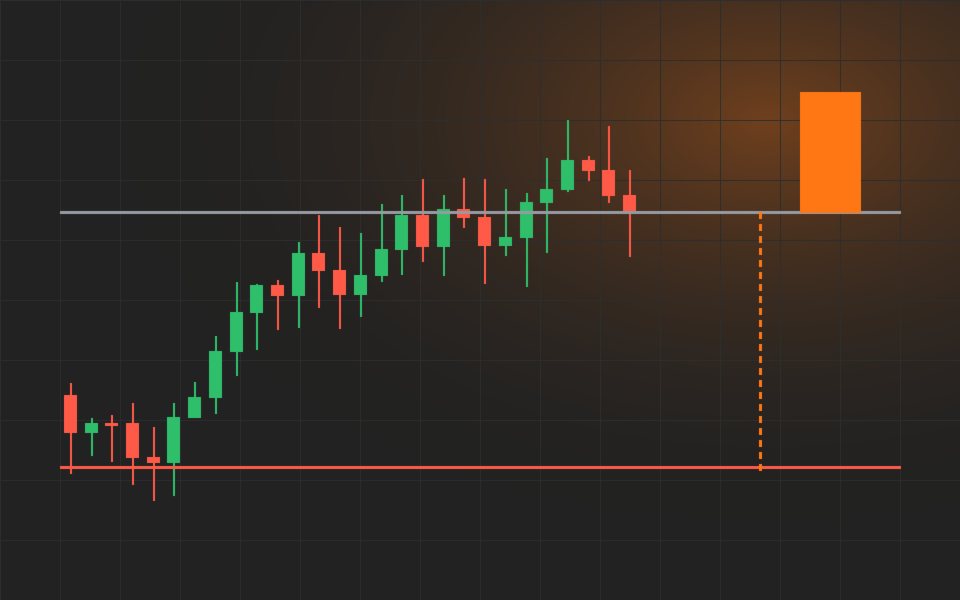
Most traders choose a position size first and a stop second. Reverse the order: the chart decides where the trade is wrong, and that distance decides how much you can buy without risking more than you planned.
The rule in one line
Pick the share of your account you accept to lose if the stop is hit. Many traders use 0.5% to 1%. Then divide that amount by the loss per coin between entry and stop.
Position size = (account × risk %) ÷ (entry − stop). The size changes from trade to trade; the money at risk does not.
A worked example with fees
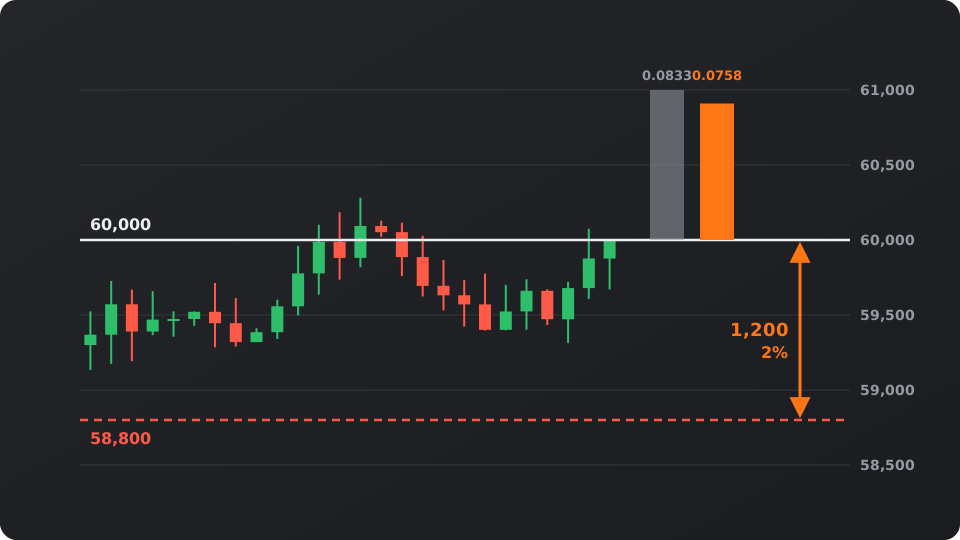
Assumptions: a 10,000 USDT account, 1% risk per trade, a long BTC entry at 60,000 and a stop at 58,800, where the setup is invalid. The stop is 1,200 away, or 2% below entry.
Without fees, the size is 100 ÷ 1,200 = 0.0833 BTC, a position worth 5,000 USDT. A fee of 0.1% on entry and on exit adds 60 + 58.8 = 118.8 USDT of cost per coin, so the loss per coin at the stop is 1,318.8.
With fees, the size is 100 ÷ 1,318.8 = 0.0758 BTC, worth about 4,550 USDT. If the stop is hit, the loss is 100 USDT including fees, exactly the 1% you chose.
Why this keeps losing streaks survivable
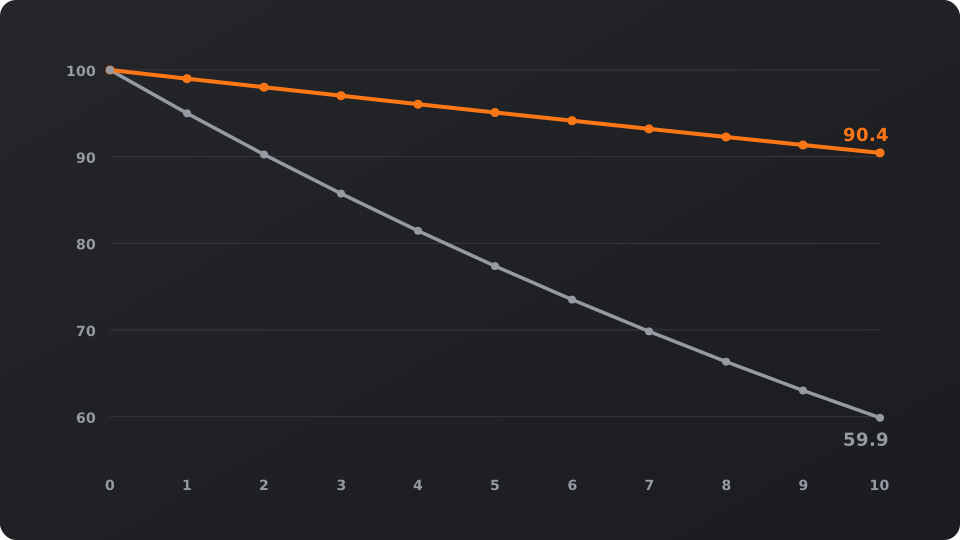
Every strategy has runs of losses. Fixed-percentage risk shrinks each loss as the account shrinks, and the size of the risk decides how deep the hole gets.
- At 1% per trade, ten losses in a row leave the account down about 9.6%. You need about 10.6% to get back.
- At 2% per trade, the same streak costs about 18.3%. You need about 22.4% to recover.
- At 5% per trade, it costs about 40.1%, and you need about 67% just to break even.
Common mistakes
- Moving the stop further away after entry. The size was calculated for the original stop, so the risk quietly grows.
- Setting the stop where the loss feels comfortable instead of where the setup is invalid. The chart, not your wallet, decides the stop.
- Forgetting fees and slippage on small timeframes, where they can be a large part of the stop distance.
- Using leverage to make the position bigger than the formula allows. Leverage changes the margin you post, not the risk you should take.
Rounding and minimum order sizes
Exchanges set a minimum order size and a step size for each market. Always round the calculated size down, never up, so the real loss at the stop stays at or below the plan. With a step of 0.0001 BTC, 0.07582 becomes 0.0758.
On a small account, the minimum order can force a larger risk than you chose. If the smallest allowed position would risk more than your limit at this stop, skip the trade or pick a market with a smaller minimum. Widening the risk to fit the exchange is the same mistake as moving the stop.
For education only, not financial advice. Trade examples are illustrative. Crypto prices are volatile, and leveraged trading can lose more than your margin.
Get one trade plan like this each week
Setup, stop, size and review in one email. Free, unsubscribe anytime.
Or follow the Telegram channel @ispsjaolqMarket now
Latest news