ATR stops: placing stops that fit the market’s volatility
A stop inside normal noise gets hit for no reason. How to use Average True Range to set the distance, and what it does to size.
On this page
A stop placed inside the market’s normal noise gets hit even when the idea was right. Average True Range measures that noise, so you can place stops that fit the current volatility.
What ATR measures
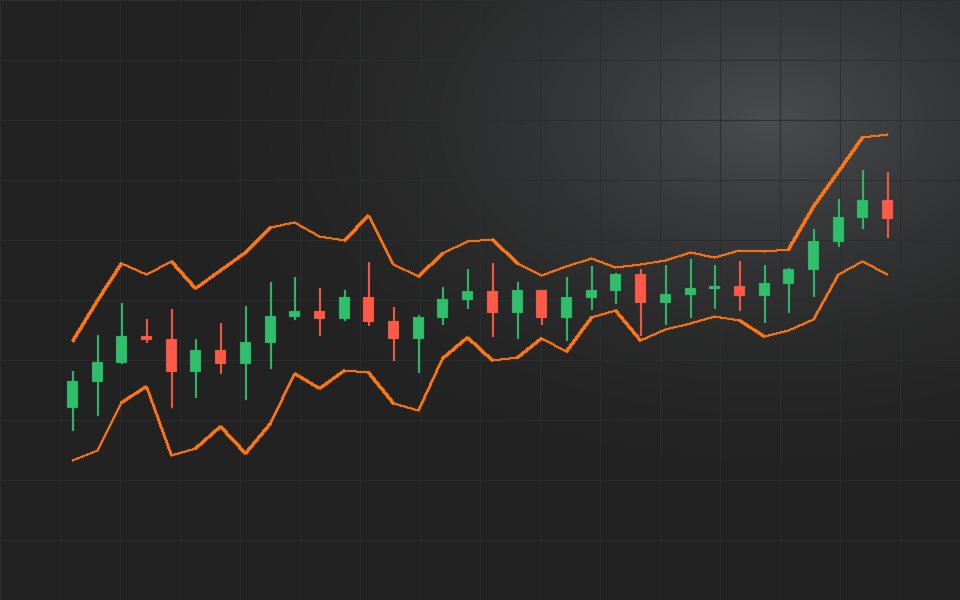
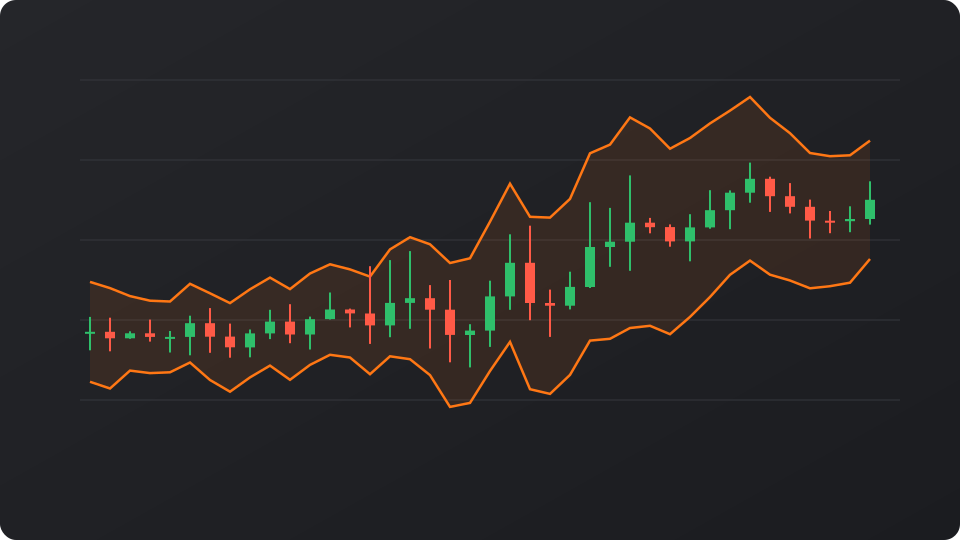
The true range of a candle is the largest of three distances: high to low, high to the previous close, and low to the previous close. It counts gaps as well as the candle body and wicks.
ATR(14) is the average true range over the last 14 candles. It is in price units, not percent, and it says how far price typically travels in one candle on that timeframe.
Setting the stop distance
A common approach places the stop 1.5 to 2 ATR beyond the entry, or beyond the swing point that invalidates the setup, whichever is further.
Assumptions: BTC on the 4H chart, entry at 60,000, ATR(14) of 600. A 1.5 ATR stop is 900 below entry, at 59,100. A 300 stop would sit at half a normal candle and is likely to be hit by noise.
What ATR does to position size
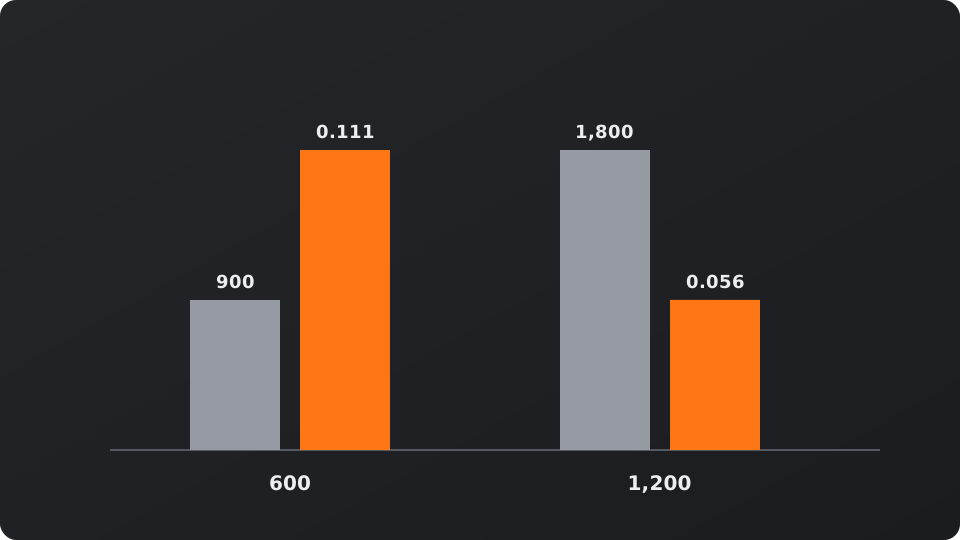
Combine the ATR stop with fixed risk. With a 10,000 USDT account and 1% risk, a 900 stop gives 100 ÷ 900 = 0.111 BTC, a position worth about 6,667 USDT, before fees.
If volatility doubles and ATR rises to 1,200, the stop moves to 1,800 and the size halves to 0.056 BTC. The money at risk stays at 100 USDT. The market got wilder, so the position got smaller.
Limits of ATR
- ATR describes the recent past. A news event can move price several ATR in one candle.
- It has no direction. It tells you how far, not which way.
- Use the ATR of the timeframe you trade; a daily ATR is far wider than a 15-minute one.
- Check the stop against structure too: a stop just above a clear swing low is still a weak stop.
Trailing a stop with ATR
ATR can also move the stop as a trade works. A simple version: after each closed candle, set the stop at the highest close since entry minus 2 ATR, and never move it down.
Assume a long from 60,000 with ATR at 600. When the highest close reaches 62,000, the trailing stop sits at 60,800, above the entry. The stop follows the trend, leaves room for normal pullbacks, and exits when price moves against you by more than the usual range.
For education only, not financial advice. Trade examples are illustrative. Crypto prices are volatile, and leveraged trading can lose more than your margin.
Get one trade plan like this each week
Setup, stop, size and review in one email. Free, unsubscribe anytime.
Or follow the Telegram channel @ispsjaolqMarket now
Latest news