XRP futures rebuild after a long flush as spot volume fades
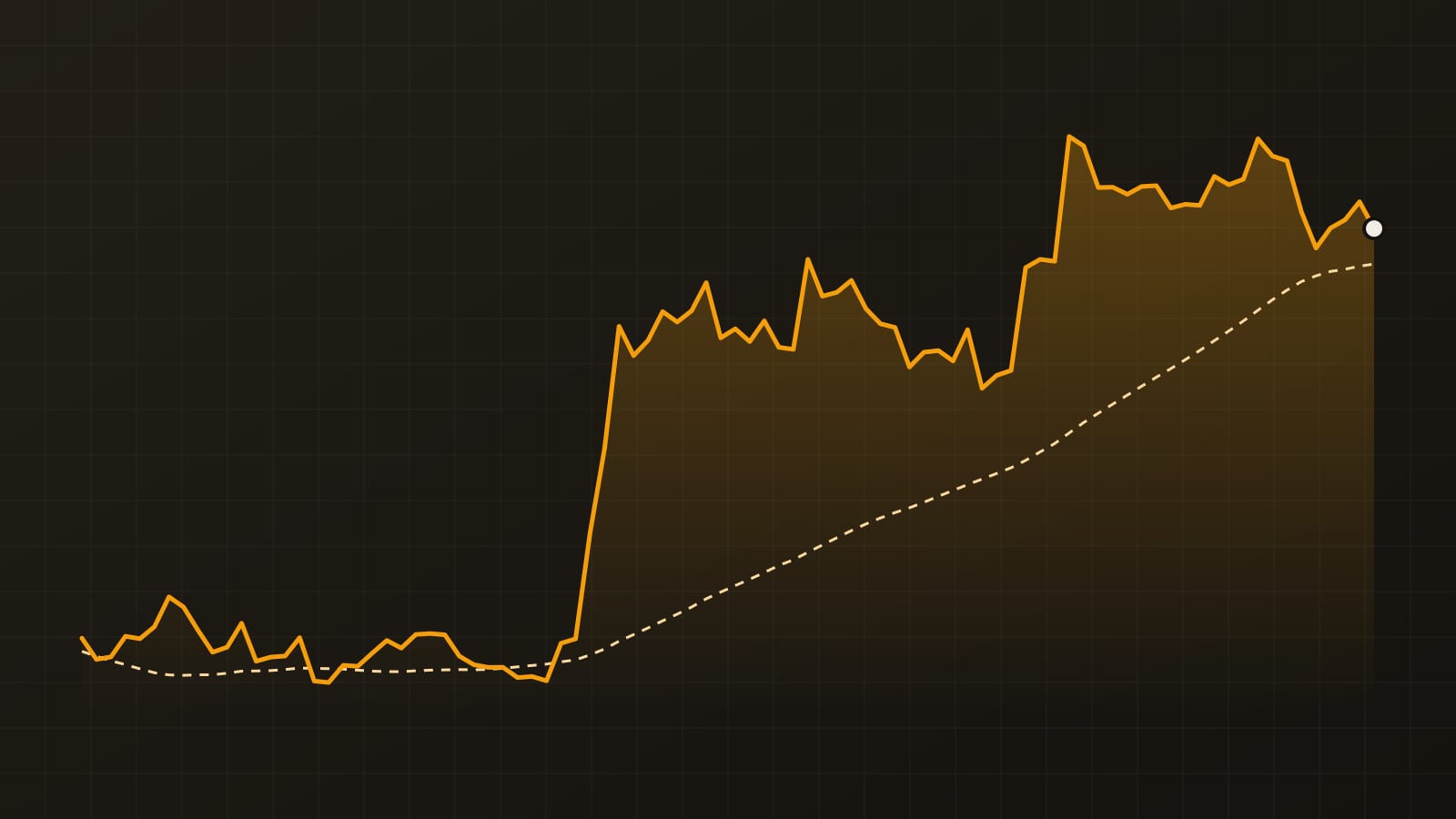
XRP longs took most of the October 7-8 liquidations. Open interest is returning and funding is positive, but Binance spot turnover fell sharply.
On this page
XRP futures shed a large block of long exposure on October 7 and 8, then started to rebuild it within days. CryptoSlate, working from data provider XRPL.to and exchange records, found that the rebound came with positive funding but a steep drop in Binance spot turnover. This article looks at who was forced out, what it now costs to hold a long, and how thin the spot support looks.
Who was forced out
The flush was one-sided. In the XRPL.to sample covering Binance, Bybit and OKX, longs liquidated over the two UTC days totalled $40.70 million, while shorts liquidated came to only $1.72 million. Binance carried the largest share at $24.69 million; the Bybit share was $11.65 million, and OKX added $4.36 million.
Two caveats matter. CryptoSlate noted these are notional contract values, not realised losses. They also undercount the true figure, because Binance reports no more than one forced close per symbol each second. So the real flush was at least this large, and possibly larger.
A liquidation is a forced close. When margin falls below the maintenance level, the exchange closes the position. In a crowded long market, forced sells can trigger the next layer of stops.
What happened to open interest
Open interest counts contracts still outstanding. Measured in XRP units, it shows whether positions actually closed, without the noise of price moves. On Binance, XRPUSDT open interest stood at 321.40 million XRP at midnight UTC on October 8 and 295.47 million XRP a day later, an 8.1% decline. Bybit moved over that same day from 211.92 million XRP to 197.90 million XRP, a 6.6% drop.
In dollar terms the Binance fall looked bigger: $456.53 million then $407.60 million, a 10.7% decline. The gap exists because price fell at the same time. Dollar open interest mixes position size with price; unit open interest isolates position size.
By midnight on October 11 the direction had turned. Binance added 3.72 million XRP, or 1.3%, and Bybit added 6.46 million XRP, or 3.3%, versus the previous midnight. Both books were still under their October 8 readings: a 7.4% shortfall on Binance and 5.2% on Bybit. Exposure is coming back, but it has not fully returned.
The cost of holding a long
Funding is the periodic payment between longs and shorts on a perpetual contract. When it is positive, longs pay shorts. When negative, shorts pay longs.
Right after the flush, shorts were paying. Settled funding for October 9, across three payments each, came to roughly minus 0.0173% for Binance, with Bybit at minus 0.0163% and OKX at minus 0.0101%. On October 10 Binance and Bybit flipped positive at about 0.0068% and 0.0015%, while OKX stayed slightly negative near minus 0.0014%. Snapshot quotes on October 11 for the 16:00 UTC payment were positive everywhere, with OKX at about 0.005818%, Binance at 0.005908% and Bybit lowest at 0.003203%.
CryptoSlate's reading was simple: positive funding plus rebuilding open interest means new long exposure carries a quoted holding cost. The rates are small per payment but add up and can change quickly.
Spot is not keeping pace
The rebound on Binance spot came on shrinking activity. XRP/USDT turnover there was 252.45 million USDT on October 8, 120.39 million on October 9 and only 54.12 million by the October 10 session, a two-day slide of 78.6%. Over October 8-10 the daily close climbed by 1.6%, with 1.3805 USDT at the start and 1.4024 USDT at the end. Buyer-initiated trades made up 51.8% of spot volume on October 9 and 43.1% on October 10.
CryptoSlate concluded that rising prices on falling turnover and mixed buyer initiation weaken the case for sustained spot demand on Binance. It also stressed that the perpetuals on all three venues are USDT-margined. Rebuilt open interest is price exposure, not proof that anyone bought XRP tokens.
Coinlytic's own data puts the last Bybit daily close at $1.39, down 7.8% over 7 days but up 24.9% over 90 days. Price sits 69% of the way from the 90-day low to the 90-day high and below its 50-day average by 2.7%.
A checklist before holding leverage
A written plan for an XRP perpetual position might re-check a few things after a week like this.
- Does my plan account for funding turning positive, and for how long I expect to pay it?
- Is my liquidation price far enough away to survive another one-sided flush of the size seen on October 7-8?
- Am I treating rising open interest as demand, when it may only be leveraged exposure on thin spot volume?
- Is my position size set from my stop distance, not from the leverage the exchange allows?
None of these questions points to a direction.
What to watch next
CryptoSlate named two tests. First, whether open interest measured in XRP keeps growing alongside sustained spot activity across sessions and venues. Second, whether funding stays positive in settled payments rather than just in snapshot quotes. If leverage rebuilds faster than spot activity, the market returns to the same crowded structure that produced the last flush.
Sources
- CryptoSlate · October 12, 2026
Written with AI assistance from the reports named above. Figures, quotes and sources are checked automatically before publishing.
For education only, not financial advice. Trade examples are illustrative. Crypto prices are volatile, and leveraged trading can lose more than your margin.
Get one trade plan like this each week
Setup, stop, size and review in one email. Free, unsubscribe anytime.
Mid-week market-structure notes on Telegram: @ispsjaolqMarket brief
Latest news