- CAT
- Risk management
- DATE
- October 19, 2026
- READ
- 6 min read
- SRC
- Decrypt +1
Altcoins fall harder than bitcoin: crypto liquidation risk
Large altcoins dropped about five times more than bitcoin in a week. Where liquidation risk sits when crypto has no circuit breakers, and what to re-check.
[≡] On this page06
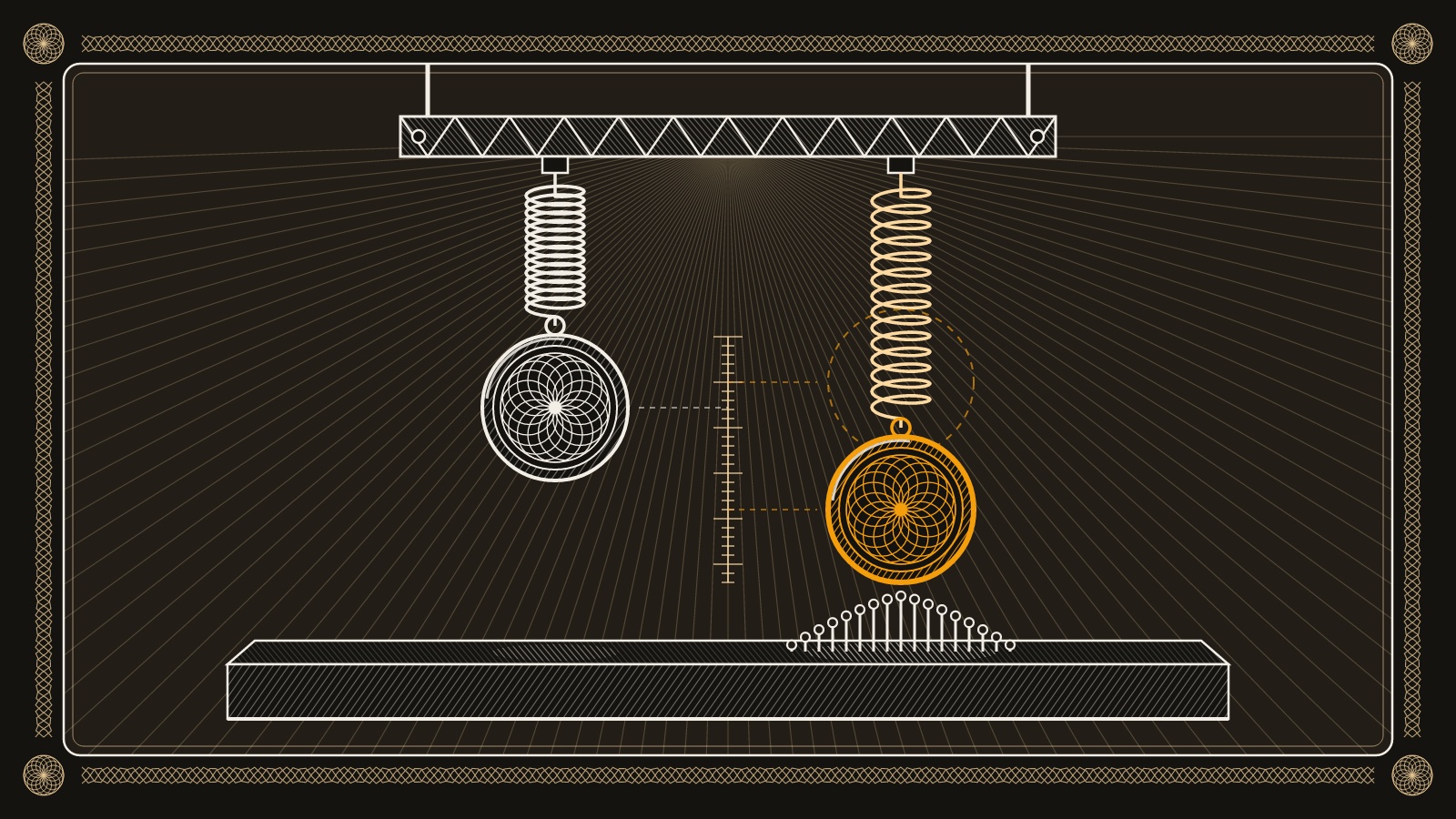
Bitcoin barely moved last week while the large altcoins took most of the damage: the average drop among majors outside bitcoin was 7.5%, about five times the bitcoin decline, according to Decrypt. This article looks at what that gap means for traders holding leveraged altcoin positions, why round numbers near recent lows matter, and why a market that never closes changes how liquidation risk builds.
What happened: a quiet bitcoin, a heavy tail
Decrypt's Morning Minute newsletter of October 19 put bitcoin at $82,161, a weekly loss of only 1.4% and a gain of roughly 1% across 30 days. The rest of the board looked different. Ether fell 5.3% to $2,415. Dogecoin lost 9.4%, XRP 7.2%, Solana 6.2% and BNB 3.3%. Hyperliquid slid 8.6% and Zcash 13.2%.
Smaller tokens fared worse still. Decrypt listed Starknet down 45%, LayerZero 24%, Pump.fun 22% and Ethena 20%, and said the twelve worst weekly performers averaged declines above 20%. Fund flows pointed the same way: spot bitcoin ETFs lost $228.4 million in the week and Ethereum ETFs $320.1 million, $548.5 million combined, with October outflows for both reaching $1.86 billion.
The pattern matters for derivatives traders. When the index asset holds and the tail sells off, a portfolio that looks diversified across several altcoin perpetuals can behave like one large, correlated bet. The drawdown lands on the same side of every position at the same time.
Liquidation risk in crypto: why the gap matters for leverage
A liquidation is the exchange closing a leveraged position because its margin no longer covers the loss. The distance to that point depends on leverage and on how far price moves against the position, not on which coin is held. A move that is routine for bitcoin can be enough to wipe out margin on a higher-beta altcoin held at the same leverage.
That is the practical lesson of a week like this one. A trader who sized every position the same way, using bitcoin's recent calm as the reference, carried far more liquidation risk on the altcoin legs than the numbers on the screen suggested. Volatility risk was not spread evenly; it was concentrated in the tail.
There is also a liquidity side. Thinner order books on smaller tokens mean that forced closes push price further per unit sold. When several accounts are forced out at similar levels, each close can move price toward the next liquidation price. That is how an orderly decline can turn into a cascade.
Round numbers near lows: where stops and liquidations gather
Solana is a useful example. According to Coinlytic's earlier market note, SOL ended October 17 at $103.47 after a $101.25 to $105.28 range, a 0.94% daily loss and 6.0% lower over seven sessions. The 30-day low, $100.62, came two days earlier, on October 15, only a short way above the round $100 mark.
Round numbers close to recent lows often gather stop orders and liquidation prices. Many traders place stops just beyond an obvious level, and leveraged longs opened near the lows can share similar liquidation points. If price trades through such a cluster, the forced selling can speed the move up. The useful habit is to check funding and open interest around those levels; this is context about where risk sits, not a call on direction.
Coinlytic's own daily-close data, taken from Bybit, gives the broader picture as of October 19. SOL last closed at $104.39, down 1.3% over seven days and 6.0% over 30 days, and sits below its 50-day average of $109.42 by 4.6%. Ether closed at $2,405, below its 50-day average by 5.7% and 13.4% under its 90-day high close. XRP closed at $1.30, 17.2% below its 90-day high close, and DOGE at $0.07911, 21.2% below its 90-day high close. Bitcoin, by contrast, closed at $82,187, up 0.4% over seven days and above its 50-day average by 0.8%.
- BTC: 81% of the way from its 90-day low to its 90-day high
- ETH: 60% of the way through that range
- XRP: 53% of the way through that range
- DOGE: 32% of the way through that range
The spread in those range positions is the same story in a different form. Bitcoin is near the top of its recent range; the large altcoins have given back more, and DOGE sits closest to its lows. These figures come from closing prices only. They say nothing by themselves about where funding stands or how much open interest is crowded on one side.
A market without circuit breakers
Decrypt's Tyler Warner tied the week to an anniversary: the date marked 39 years since the Dow lost 22.6% in one session on Black Monday. He wrote that the original crash was driven by automated selling triggering more automated selling, with nothing to halt trading. Stock markets now have circuit breakers, and Korea's Kospi triggered one last week.
Crypto works differently. "Crypto has none. It trades through the weekend, through the open, through everything," Warner wrote. Perpetual futures keep marking positions to market every hour of every day, and liquidation engines keep running when traders are asleep or away. There is no pause in which margin calls can be met calmly.
Warner pointed to October 10, 2025, when a liquidation cascade repriced the entire crypto market within hours. He described the current setup as a slow, orderly bleed rather than a cascade, with bitcoin holding and a modest bid returning across the board over the weekend. Even so, the absence of a halt mechanism is a structural fact. Any plan that relies on adding margin later assumes the trader will be present and the exchange will be reachable when it counts.
What a leveraged trader would re-check
None of the figures above tell anyone what to do. They do suggest a few questions worth asking before holding a leveraged altcoin position through another volatile week.
- Is my position size on each altcoin set from that coin's own recent moves, or borrowed from bitcoin's calmer behaviour?
- How far is my liquidation price from the nearest round number or recent low, where other stops and liquidations may sit?
- If several of my altcoin positions fall together, does my total margin survive the combined move, not just each one alone?
- Can my plan handle a sharp move at a weekend or overnight hour, when I cannot add margin or close by hand?
Stop distance and leverage are two sides of the same decision. A wider stop needs a smaller position to keep the same loss in money terms, and a higher leverage pulls the liquidation price closer to entry.
What to watch next
The first thing to watch is whether the gap between bitcoin and the altcoins keeps widening or starts to close. A tail that keeps selling while bitcoin holds tends to put pressure on the most crowded altcoin longs. The second is behaviour around obvious levels, such as the round $100 mark on Solana: a clean break through a level where liquidations cluster is when forced selling tends to show up.
The third is fund flows. Decrypt's figures show October outflows from bitcoin and Ethereum ETFs at $1.86 billion. Funding rates and open interest on the major perpetual venues are the place to see whether leveraged traders are adding to positions into the decline or stepping back from them.
Sources
- Decrypt · October 19, 2026
- Coinlytic Telegram channel · October 18, 2026
Written with AI assistance from the reports named above. Figures, quotes and sources are checked automatically before publishing.
For education only, not financial advice. Trade examples are illustrative. Crypto prices are volatile, and leveraged trading can lose more than your margin.
Get one trade plan like this each week
Setup, stop, size and review in one email. Free, unsubscribe anytime.
Mid-week market-structure notes on Telegram: @ispsjaolq